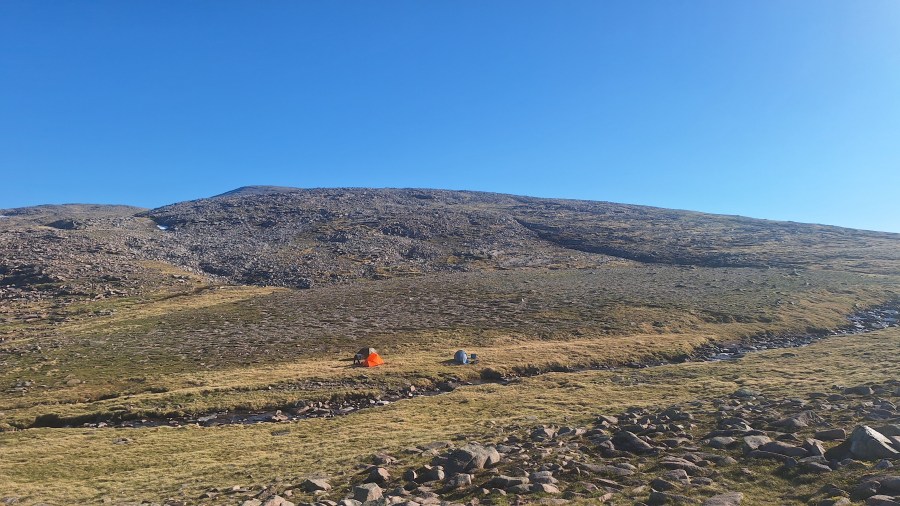
Three days in the Scottish wilderness, working on your leadership skills and challenges with a small group of other leaders.
Organisational or team leadership is hard and often lonely. Sometimes what you need is time away from the daily pressures, thinking things through in the company of other leaders. These three-day/two-night wilderness trips are designed to help you do just that.
Watch this space for 2027 dates.
So why do this in the mountains?
- Mountaineering is as much about attitude of mind as it is about physical conditioning. Clear and calm thinking, good decision-making, and a realistic and honest self-assessment are all key factors in the success or failure of any mountaineering endeavour. As we go outside, we are helped to turn inwards. “Perhaps this is one of mountaineering’s biggest appeals: while seeking the freedom of the hills, we come face-to-face with ourselves” (Eric Linxweiler and Mike Maude, Mountaineering: The Freedom of the Hills , 9th edition, 2017).
- Mountaineering and wilderness adventure is a form of personal spiritual discipline. It is a way of practising habits that will give you a healthy attitude towards the rest of life. Travelling light, exercising patience, and encountering silence — all of these are good disciplines to bring back to the hurly-burly of our busy ‘normal’ lives (Belden Lane, The Solace of Fierce Landscapes, 2007).
- Unique aspects of adventure activities, such as discomfort and physical challenge, are directly linked to improved wellbeing. We seem to be built for extremes, to experience heat, fatigue, hunger and thirst. Reintroducing these stress factors can improve our health by triggering long-dormant biological responses in our bodies. It builds resilience, strengthening our ability to face adversity and challenge, because we know that we have faced other problems and worked out how to overcome them (Belinda Kirk, Adventure Revolution, 2021).
- A strong sense of personal agency or what is sometimes called ‘an internal locus of control’ is a central factor in both a resistance to illness and to hardiness in the face of the ordinary stresses of life (Judith Herman, Trauma and Recovery, 2015).
- Research has shown that wilderness experiences help leaders to become more in touch with their own core values, create a deeper sense of self, and improve their capacity for attentive listening (Boy van Droffelaar, Journal of Adventure Education and Outdoor Learning, 2025).
- The wilderness has been described as a “leadership laboratory”, which trains self control, delayed gratification, strategic thinking and decision-making, calmness under pressure, deep focus, responsibility for others, long-term thinking towards goals, and humility (Sherin Elmeleegy, neuroscientist and mountaineer).
All of these are essential leadership attributes.
Quotes from previous Wild Leadership course participants:
“You are seriously knowledgeable and expert, delivering all of your leadership expertise (in the form of a seminar, training and 1:1 coaching) while simultaneously modelling your own leadership skills”.
“The course design allowed ample time for reflection, which is so valuable. At big conferences, I end up feeling like a force-fed goose, stuffed with content and new social connections, with no time to digest any of it. This 48 hours of active learning naturally and easily made time for that”.
“The Wild Leadership course was exceptionally useful, leaving me with much to reflect on regarding my own leadership, resources for understanding the development of leadership thinking and practice, and a greater understanding of how an approach to leadership must vary between differing contexts and even within the same context over time”.


